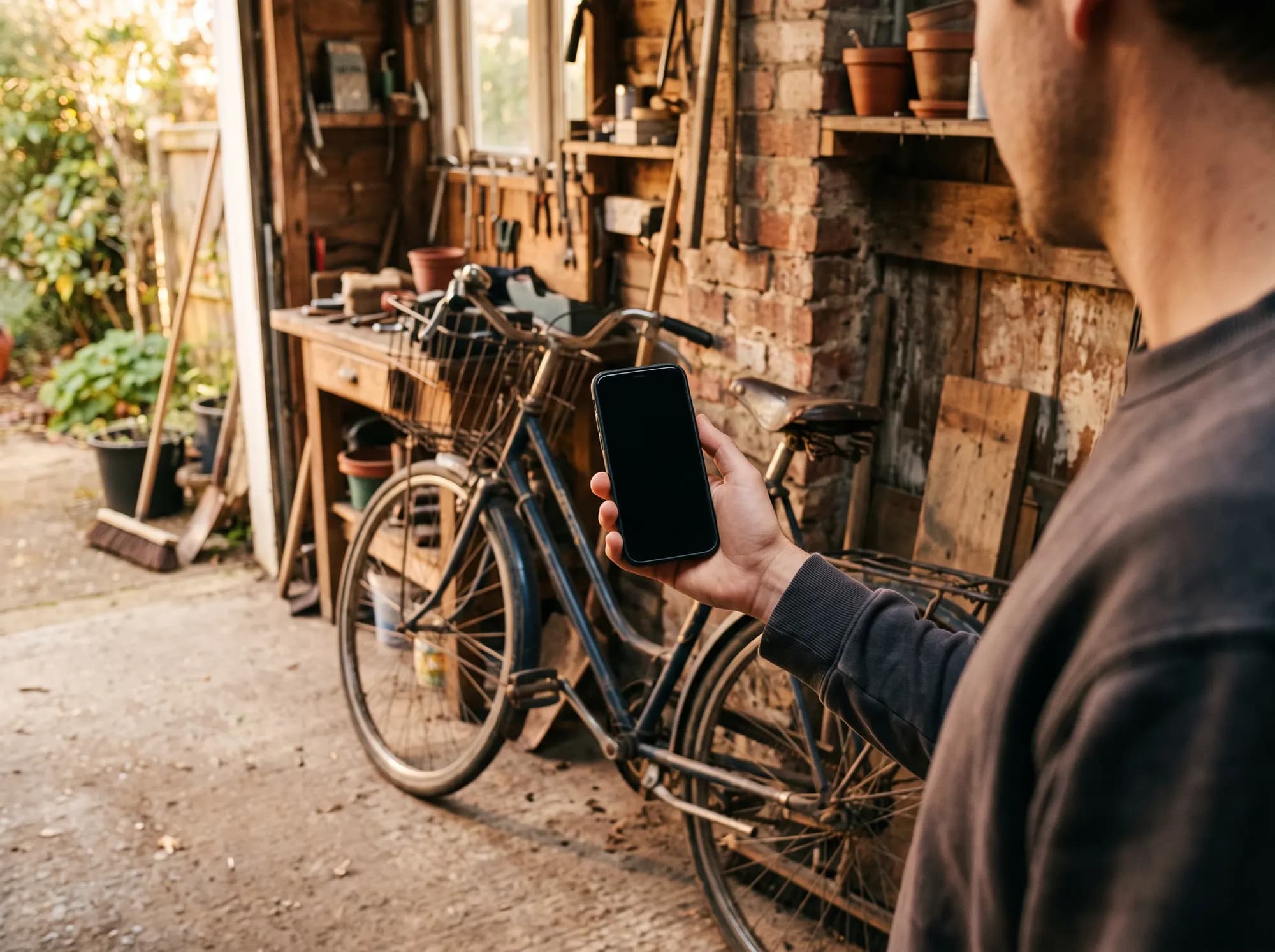
What can I get for this?
Point your phone at the thing you stopped using. Find out what it is worth. Trade it for something you actually want.
Twenty seconds from photograph to range. Just point and find out.
- Time
- About twenty seconds from photograph to range.
- Account
- Needed. Trading and appraising both run on one.
- Cost
- Five appraisals a week free. Tokens after that.
What happens when you press it
01
It works out what the thing is
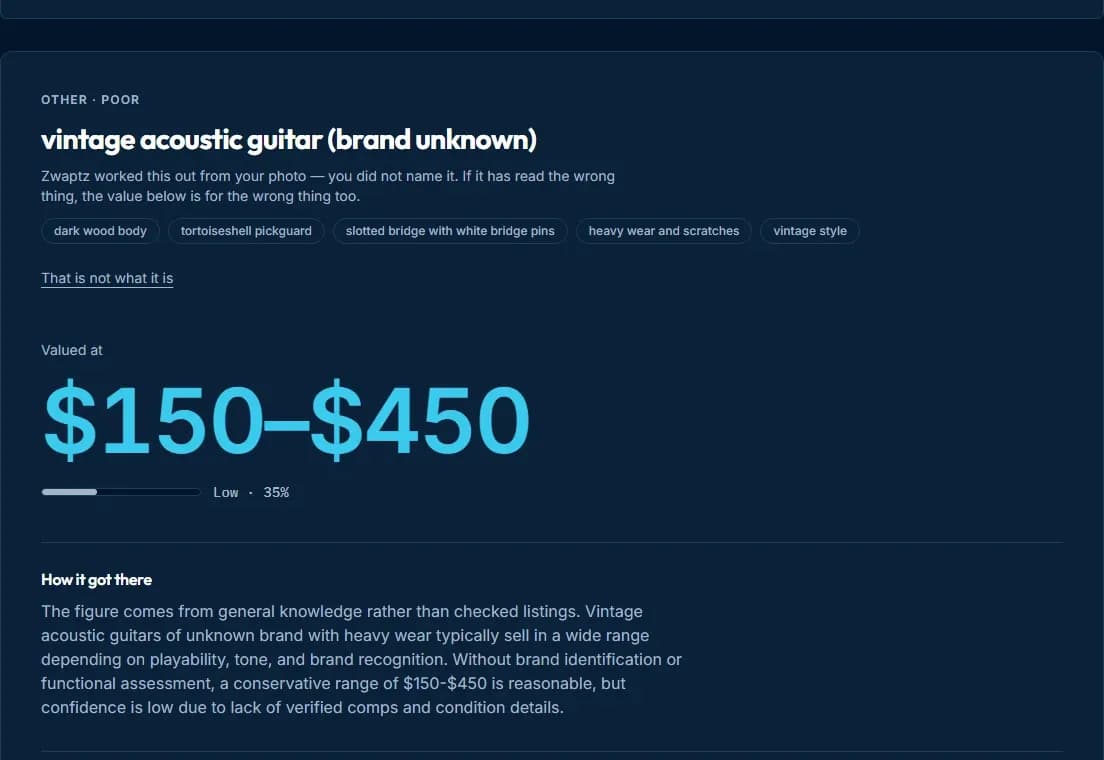
Brand, model, edition, and the details a photograph can carry — a serial plate, a maker’s mark, the shape of a fitting, how worn an edge is. You can also type the name yourself, and a name you type beats a guess from one picture every time.
02
It looks for what comparable ones sold for

Four things that are easy to value and one that is not. The scale has a market; the shoe last depends entirely on who is looking. 03
It gives you a range, and says how sure it is
Not a price. A band, with Low, Medium or High beside it, and the reasoning underneath so you can disagree with it for a reason rather than a feeling. Why that is a range and not a number is on confidence.
You never price your own things
You never price your own things.
That is the part people find strange for about a minute. You do not have to decide what your bread maker is worth, defend the figure, or watch somebody talk you down from it.
The range does that job, and after that the question stops being about money. It becomes: do I want the thing I am looking at?
It works on the ordinary things
Not only on the rare ones. Most of what people appraise is exactly what you would expect to find in a cupboard.


The middle step is not connected yet. Today a range comes from what the model already knows about a market rather than from listings it looked up, every valuation says so on its own page, and confidence is capped until it is connected. Finishing that is the first thing the campaign pays for.