

02 · of five
What’s it worth?
Point your phone at the thing you stopped using. Twenty seconds from photograph to range, and no forms to fill in.
- Time
- About twenty seconds from photograph to range.
- Account
- Needed. Trading and appraising both run on one.
- Cost
- Five appraisals a week free. Tokens after that.
What actually happens
Every screen below is the running product, captured. Not a mockup and not a drawing.
1 Photograph it
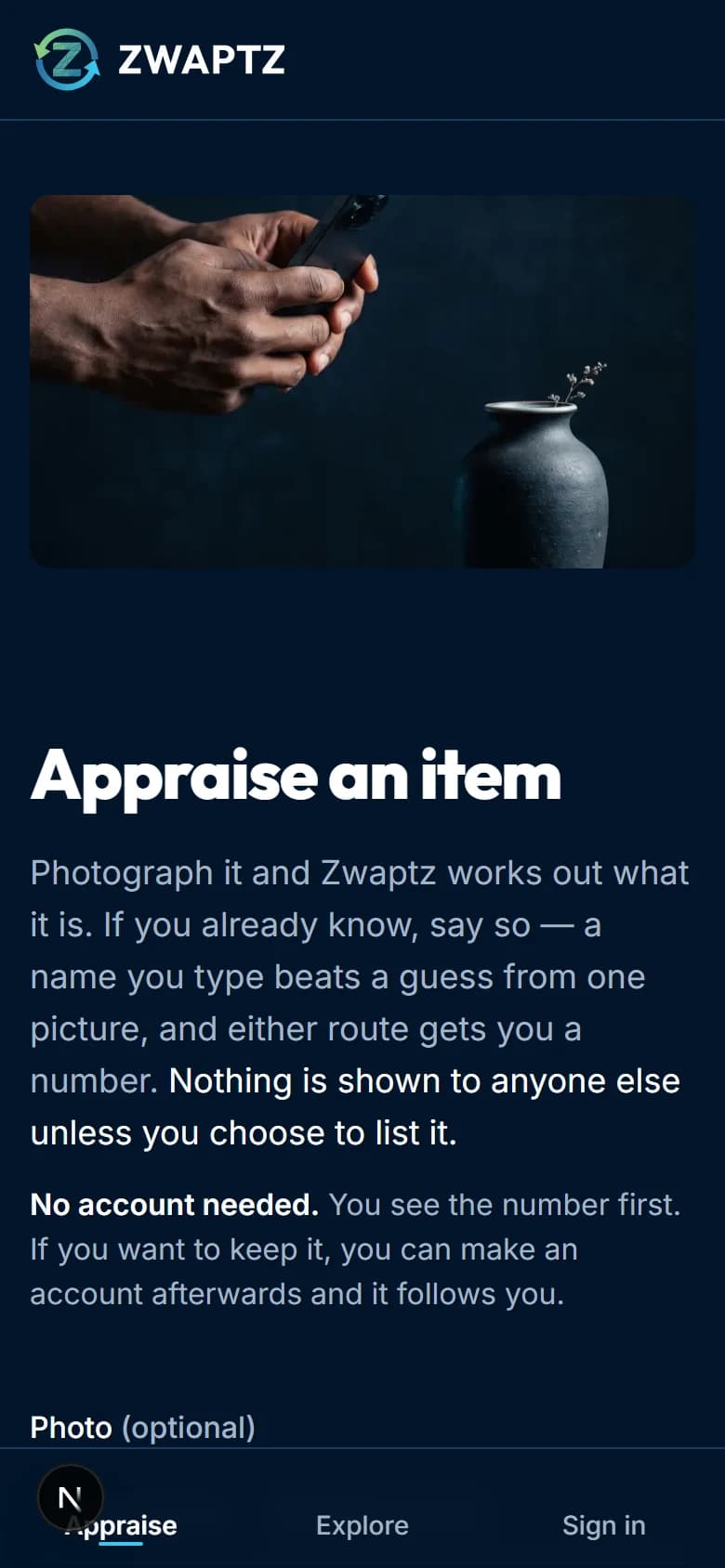
One photograph, no forms. You can also type the name yourself — a name you type beats a guess from one picture.
2 It works out what it is
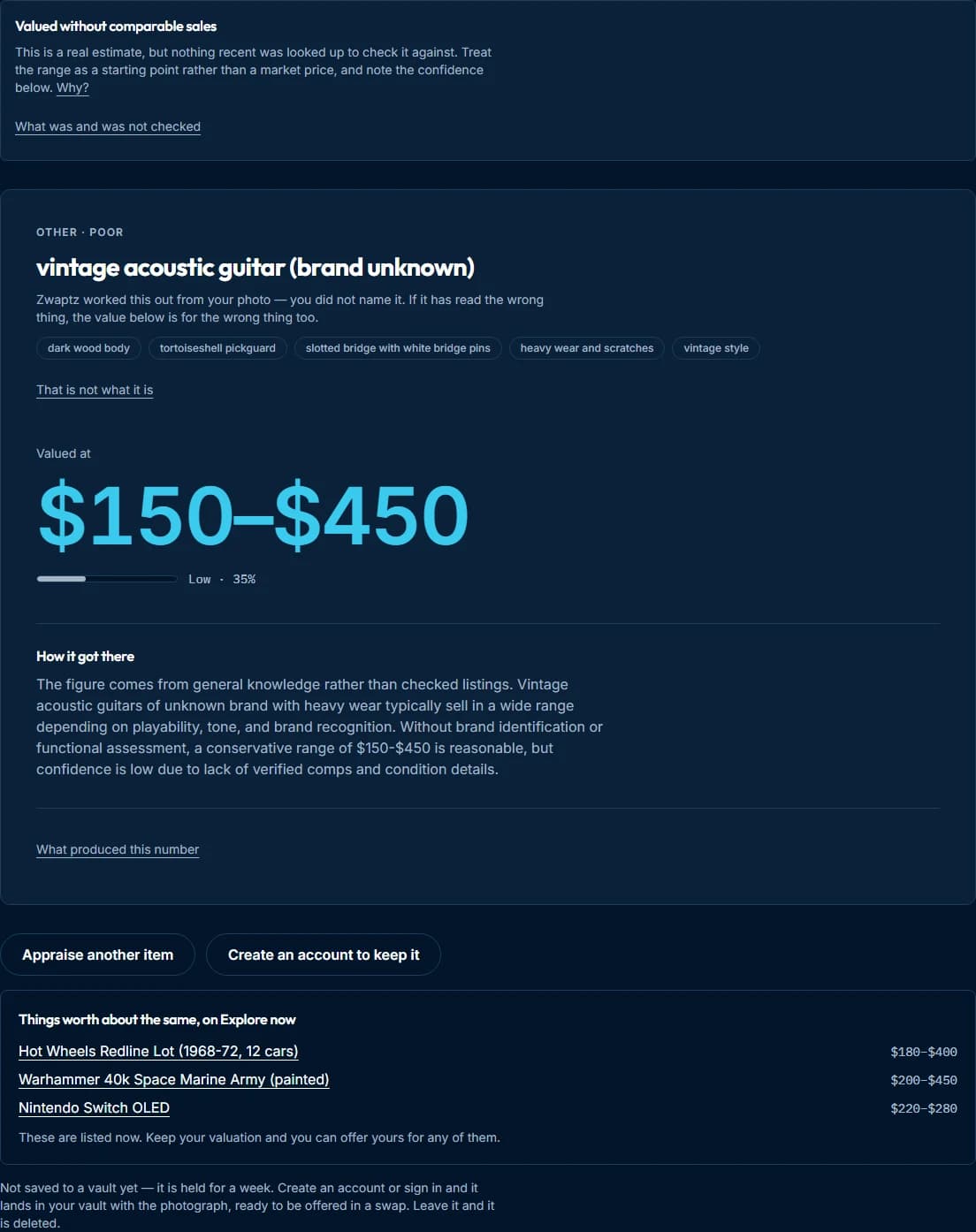
Brand, model, edition, and the details a photograph can carry — a maker's mark, how worn an edge is.
3 You get a range
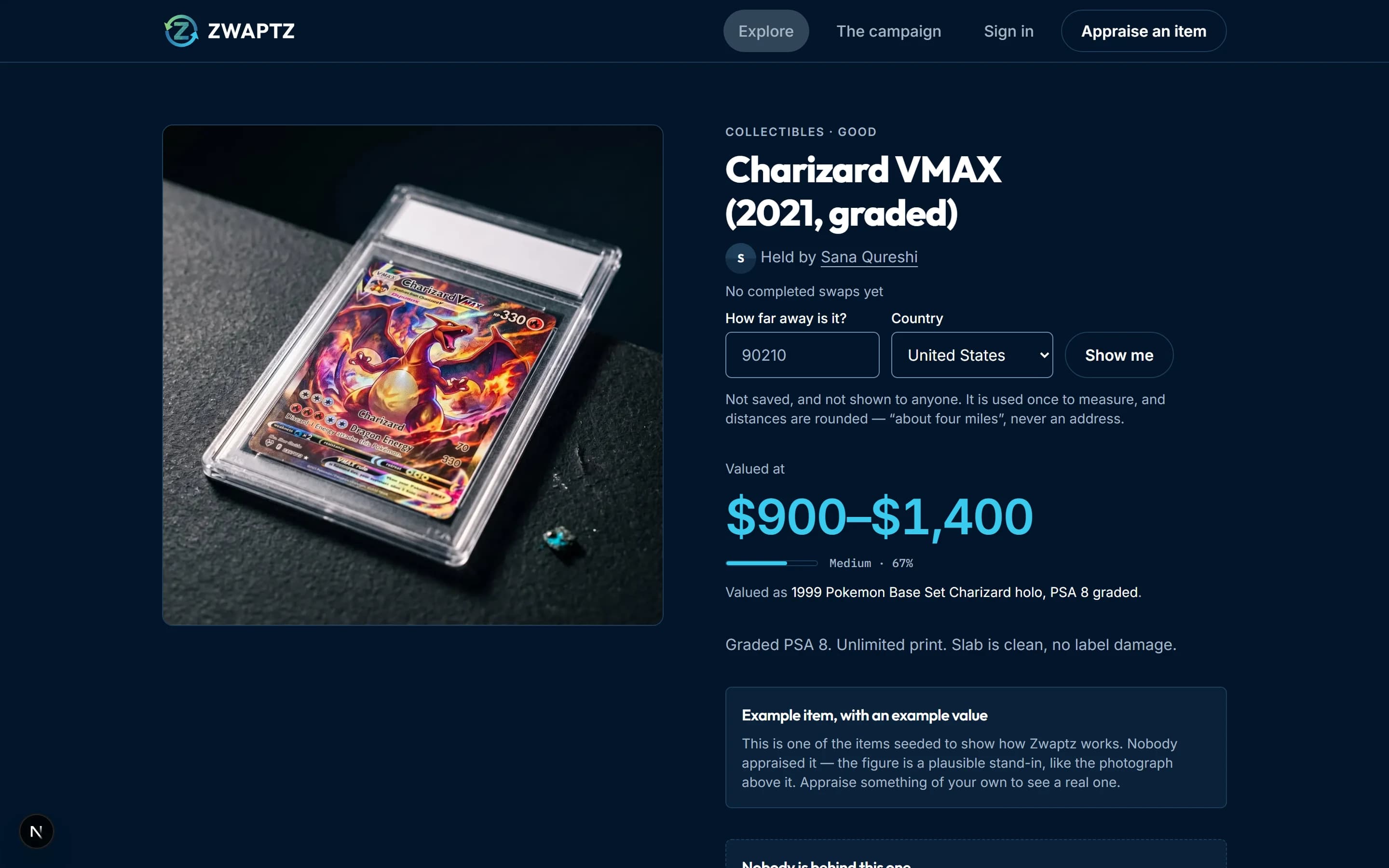
Not a price. A band, with Low, Medium or High beside it and the reasoning underneath.
Why not one number
It tells you when it isn’t sure.
Two of the same object in different condition are not worth the same money, and no amount of confident presentation changes that. A single figure hides it. A range with a confidence figure shows it.
A wide range with low confidence is the honest answer, not a failure.
High
$300–$380
A thing with a model number, made in quantity, sold often.
Medium
$120–$260
Identified confidently, but condition moves the figure a long way.
Low
$25–$260
Something could not be read — a maker's mark, an edition, a part.

“That is not what it is”
Every valuation carries that line, and it is a button. Name the thing yourself and it is valued again from your answer rather than from the photograph. A model reading one picture gets this wrong in ways you will spot instantly.
What the confidence figure is measuring, and where it is capped, is on confidence.
Comparable sales are not looked up yet, so a range comes from what the model already knows about a market rather than from listings it checked, and confidence is held down to match. Every valuation says which of the two it is. Connecting that stage is the first thing the campaign pays for.